The most common inherited conditions in Toy Poodles are patellar luxation (slipping kneecap), a progressive retinal condition known as prcd-PRA, and Legg-Calvé-Perthes disease. Most of these can be prevented through health testing of the parent dogs. The breed’s ear structure and small jaw also make ear infections and dental disease areas requiring routine care.
One of the most common phrases you will hear while researching puppies is this: “there are no genetic conditions in this breed.”
When you hear it, take a step back. No dog breed carries zero genetic risk — mixed breeds included. Inherited disease risk is a matter of biology, not of breed quality.
What actually matters is not whether risk exists but how it is managed. Which tests were performed on the parent dogs, which pairings were deliberately avoided, what checks the puppy has been through — these are the questions worth asking.
Why “no risk” cannot be claimed
Dog breeds were developed by selecting for particular traits across generations. That selection concentrates the genes responsible for desired characteristics — and, inevitably, some disease genes present in the same pool. This is true of every purebred dog.
The clearest evidence is the breed clubs’ own testing protocols. The Poodle Club of America’s CHIC health programme requires three evaluations for Toy Poodles:
- A prcd-PRA DNA test from an OFA-approved laboratory
- An annual eye examination by a board-certified ACVO veterinary ophthalmologist
- An OFA evaluation for patellar luxation
If a breed carried no risk at all, its own club would not mandate testing.
The right question is therefore: “What testing was done on the parents?” A breeder who answers that clearly has told you far more than one who says there is no risk.
Known inherited conditions in Toy Poodles
| Condition | What it does | How it is prevented |
|---|---|---|
| Patellar luxation | Kneecap slips out of position; limping, hopping gait | OFA patella evaluation of parents after 12 months |
| prcd-PRA | Progressive retinal cell loss; night vision declines first, then sight | DNA testing to identify carriers; two carriers never paired |
| Legg-Calvé-Perthes | Deterioration of the femoral head; limping between 4 months and 1 year | Radiographic screening; affected dogs not bred |
| von Willebrand disease | Inherited clotting disorder | DNA testing |
| Sebaceous adenitis | Inflammation of skin oil glands; coat loss and skin problems | Dermatopathologist evaluation |
| Hypothyroidism | Weight gain, coat deterioration, lethargy | Thyroid evaluation |
Seeing this list may feel alarming. The essential message is the opposite: most of these conditions are testable, and therefore preventable. The bad news in genetics is not that these conditions exist — it is breeding without testing for them.
Patellar luxation: the most frequent concern
Slipping kneecap is the most common orthopaedic condition in small breed dogs, and the Toy Poodle belongs to that group.
The kneecap normally travels within a groove at the end of the femur. When that groove is shallow or the surrounding structures are weak, the kneecap slips out of it. Published research indicates a genetic contribution to this condition in Toy Poodle puppies.
What to look for
- Holding one hind leg up for a few strides while walking, then returning to normal
- A hopping, bunny-like gait in the hind legs
- Difficulty rising from a sitting position
- Sudden pauses followed by shaking the leg
- A crouched gait in advanced cases
The first sign is the classic one: the dog is running, suddenly lifts a leg, continues a few strides on three legs, then carries on as if nothing happened. Owners usually interpret this as “must have tripped”.
Grading
Patellar luxation is graded from 1 to 4. At grade 1 the kneecap can be displaced manually but returns on its own. At grade 4 the luxation is permanent — the dog either carries the limb or walks in a crouched position.
Early grades can often be managed with weight control, avoiding slippery surfaces and controlled exercise. Advanced grades may require surgery.
What you can influence as an owner
- Weight control. Excess weight directly increases load on the knee joint. In a small dog even 300 grams makes a difference.
- Slippery floors. Sudden turns on tile or laminate create risk; rugs and non-slip mats help.
- Jumping down. Limit jumping off sofas and beds; use a ramp or steps.
- Standing on hind legs. Endearing, but it loads the knees.
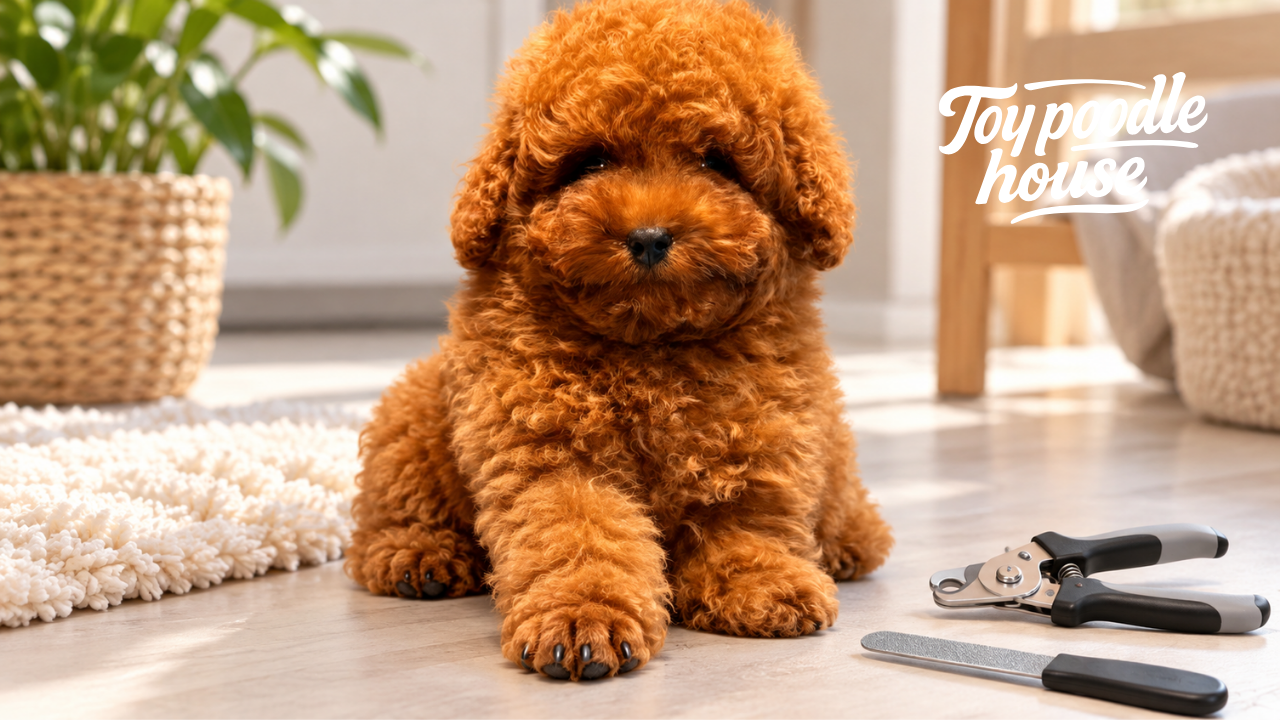
- Nail care. Overlong nails alter posture and change joint loading.
Ear health: a breed-specific issue
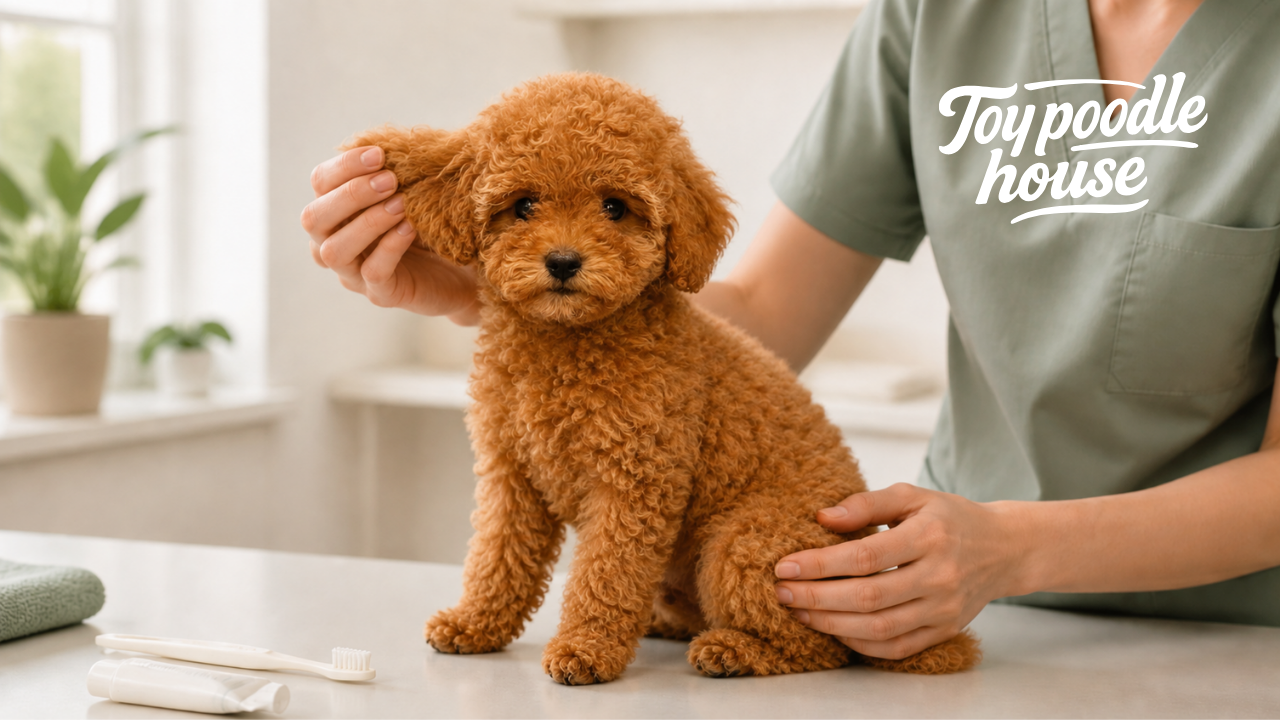
The Poodle’s ear structure carries a particular risk of infection, for three reasons: the ears sit low and cover the canal, reducing ventilation; hair grows within the ear canal itself, trapping moisture and debris; and moisture is easily retained in this enclosed environment.
Warmth and moisture together create favourable conditions for bacteria and yeast.
Signs of infection
- Persistent scratching or rubbing the ear against surfaces
- Frequent head shaking
- A sour or unpleasant odour from the ear
- Redness or warmth inside the ear
- Dark or yellowish discharge
- Discomfort when the ear is touched
Preventive care
- Check weekly for redness, odour and discharge.
- Use ear cleaning solution only on veterinary advice — over-cleaning also disrupts the canal’s natural balance.
- Never insert cotton buds into the canal; they push debris deeper.
- Dry the ears thoroughly after bathing or swimming.
- Ear canal hair should be addressed during grooming; ask your vet how it should be handled.
- Recurring infections warrant investigation for allergies — repeated ear problems are frequently a symptom of an underlying allergy.
Dental health: the biggest issue in small breeds
Dental disease is the most common — and most neglected — health problem in small breed dogs.
The cause is structural: small breeds have small jaws but the same number of teeth as large breeds. Teeth sit crowded together, food accumulates between them and plaque forms faster.
The sequence is predictable: plaque builds up, hardens into tartar, gums become inflamed, supporting tissue is damaged and tooth loss follows. Advanced dental disease is known to have effects beyond the mouth.
Warning signs
- Bad breath — this should not be normalised as “dog smell”
- Red or bleeding gums
- Yellow-brown tartar on the teeth
- Difficulty eating, chewing on one side only
- Excessive drooling
- Avoiding having the mouth touched
Preventive dental care
The honest position here: nothing replaces brushing. Chews and toys are supportive, not alternatives.
- Regular brushing. Daily is ideal; even a few times a week makes a clear difference.
- Dog-specific toothpaste. Human toothpaste is not suitable and can be harmful if swallowed.
- Start young. Dogs introduced to brushing early accept it readily; starting in adulthood is far harder.
- Routine veterinary checks. Oral examination should be part of every annual visit.
- Retained baby teeth. In small breeds, milk teeth sometimes fail to fall out and remain alongside the adult tooth, disrupting alignment. This often requires attention.
Questions to ask a breeder
- What health testing was carried out on the mother and father? May I see the documentation?
- Was a prcd-PRA DNA test performed? What was the result?
- Was a patella evaluation carried out?
- Has the puppy had a veterinary examination, and is there a report?
- On what dates were vaccinations and parasite treatments given?
- Have there been known health issues in the line?
- What happens if a problem arises after I take the puppy home?
A response along the lines of “we don’t have those problems” is not a good sign. A good sign is documentation being shown and any risks discussed openly.
At Toy Poodle House, puppies are delivered microchipped, with a passport and a veterinary health report. You can read about our documentation and process on the certificates page.
Health timeline by age
| Period | What to do |
|---|---|
| 0-4 months | Complete vaccination programme, parasite treatment, first general examination, introduce tooth brushing |
| 4-12 months | Monitor retained baby teeth, watch for limping, assess hips and knees (Legg-Calvé-Perthes presents in this window) |
| 1-7 years | Annual examination and boosters, regular dental checks, weight monitoring |
| 7 years and over | Twice-yearly checks, eye examination, blood work, joint monitoring |
In summary
The Toy Poodle is a healthy, long-lived breed — but stating that it carries no genetic risk is not accurate information. What is accurate: known inherited risks exist, most are testable, and responsible breeding prevents the majority of them.
Your part as an owner is preventive care: weight control, limiting slippery surfaces, weekly ear checks, a tooth brushing habit and an annual veterinary examination.
These five habits either prevent most potential problems outright or catch them early. The difference between a knee problem noticed early and one noticed years later is often the difference between managing it and operating on it.
To learn about our health-screened Toy Poodle puppies and our process, you can reach us on WhatsApp or read more about us.
Frequently Asked Questions
Do Toy Poodles have genetic health problems?
Yes. As with all purebred dogs, known inherited risks exist. The most common are patellar luxation, prcd-PRA and Legg-Calvé-Perthes disease. Most can be prevented through health testing of the parent dogs.
How do I recognise patellar luxation?
The classic sign is the dog holding one hind leg up for a few strides while walking, then returning to normal. A hopping gait, difficulty rising and sudden pauses may also occur. Diagnosis requires veterinary examination.
Can slipping kneecap be prevented?
Genetic predisposition cannot be prevented, but risk can be reduced. Weight control, limiting slippery surfaces, preventing jumping from height and regular nail care all reduce joint loading. Patella evaluation of the parents is the most effective measure.
What is prcd-PRA?
An inherited eye condition causing progressive loss of retinal cells. Night vision and field of vision decline first, and the process can progress to blindness. DNA testing identifies carriers; never pairing two carriers prevents the condition.
Why do Poodles get ear infections?
Low-set ears reduce ventilation of the canal, and hair growing inside the canal traps moisture and debris — favourable conditions for bacteria and yeast. Weekly checks, drying after bathing and veterinary-advised cleaning are protective.
Why do Toy Poodles have dental problems?
Small breeds have small jaws but the same number of teeth as large breeds. Crowded teeth accelerate plaque formation. Regular brushing is the most effective preventive measure.
What if baby teeth don’t fall out?
A retained milk tooth alongside the adult tooth disrupts alignment and increases plaque accumulation. This is common in small breeds and is often addressed at the time of neutering.
What documentation should I ask for?
Health test documentation for the parents, the puppy’s veterinary health report, vaccination and parasite treatment records, microchip details and passport. Expect documentation rather than reassurance.