How to Identify an Original Toy Poodle: The Purebred Analysis
When you start researching to add a Toy Poodle to your life, the sheer variety of listings can be overwhelming. Unfortunately, many sellers exploit the popularity of this breed by offering mixed-breed puppies as “purebreds.” While every puppy looks equally adorable at 8 weeks old, an original Toy Poodle reveals its true genetic heritage through specific physical markers.
At Toy Poodle House, we’ve compiled this guide to help you avoid the “mixed-breed trap” by analyzing the most critical physical characteristics that define a purebred.
The Muzzle and Nose Structure: An Elegant Profile
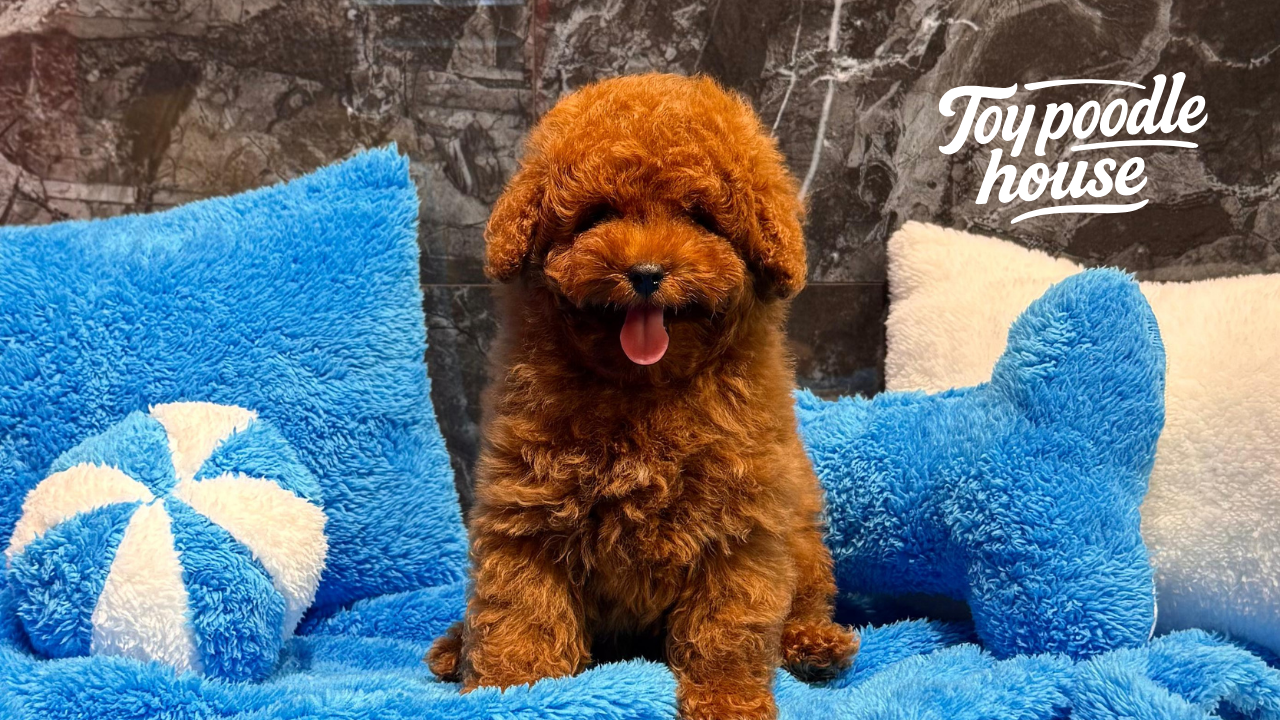
One of the most distinct features of a purebred Toy Poodle is the shape of its head. Mixed breeds—often crosses with Maltese or Terriers—usually have blunter, flatter snouts.
-
Refined Lines: A purebred Poodle has a slender, slightly long muzzle that is in perfect proportion to its skull. The “stop” (the transition from forehead to snout) is moderate but clearly defined.
-
Nose Color: Depending on the coat color (usually black or liver), the nose should be solid and moist.
-
The Bite: They should possess a perfect “scissor bite,” where the upper teeth closely overlap the lower teeth.
Eyes and Expression: Almond vs. Round
A puppy’s gaze tells a story about its genetic lineage. A purebred Poodle’s eyes are never bulging or excessively round.
-
Almond Shape: Original Toy Poodles have slightly almond-shaped eyes that are set neither too wide nor too close together.
-
Dark and Piercing: The eyes are typically very dark, reflecting an expression that is intelligent, alert, and full of “spark.” If a puppy has very round, watery eyes with a vacant expression, it likely carries genes from another breed.
Coat Texture and Curls: The “Hair” vs. “Fur” Secret
The miracle that sets Poodles apart from almost every other breed is their coat. Their covering is technically hair, not fur, similar to human hair.
Pro Tip: A purebred Toy Poodle never sheds and does not produce that typical “doggy odor.” If the puppy’s hair is coming off on your hands or if the texture is silky and flat, it is not a purebred Poodle.
-
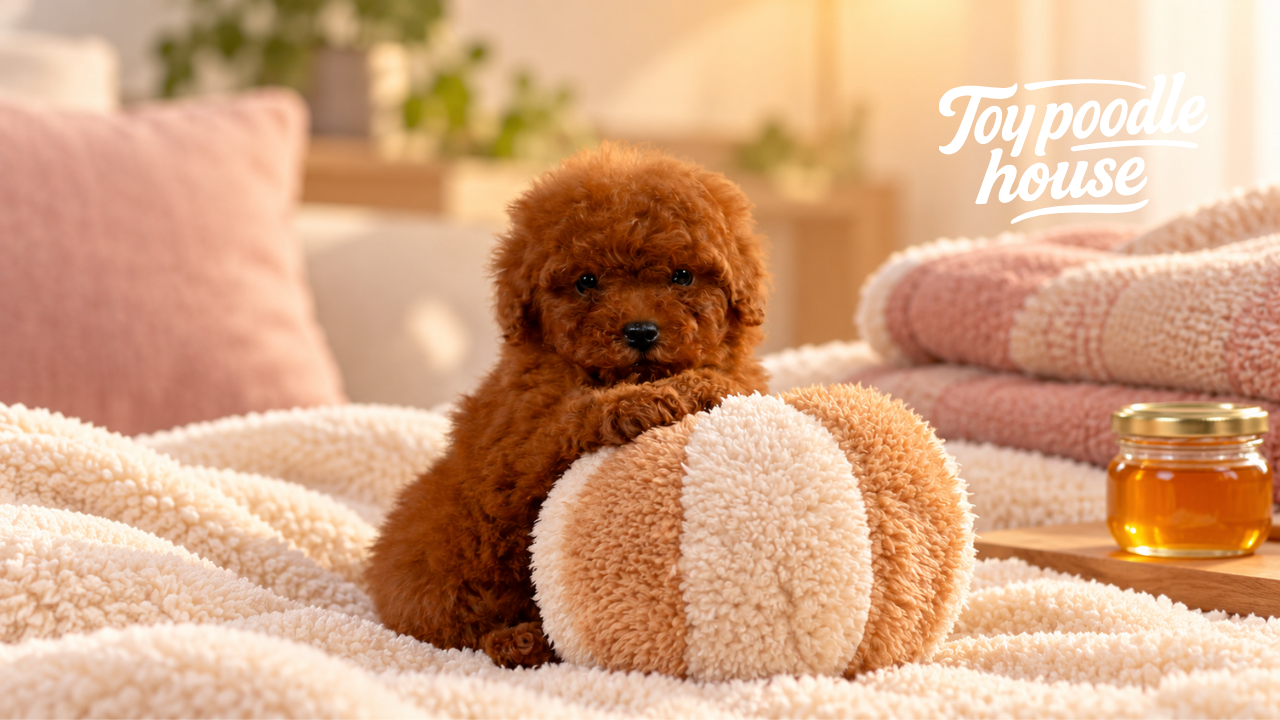
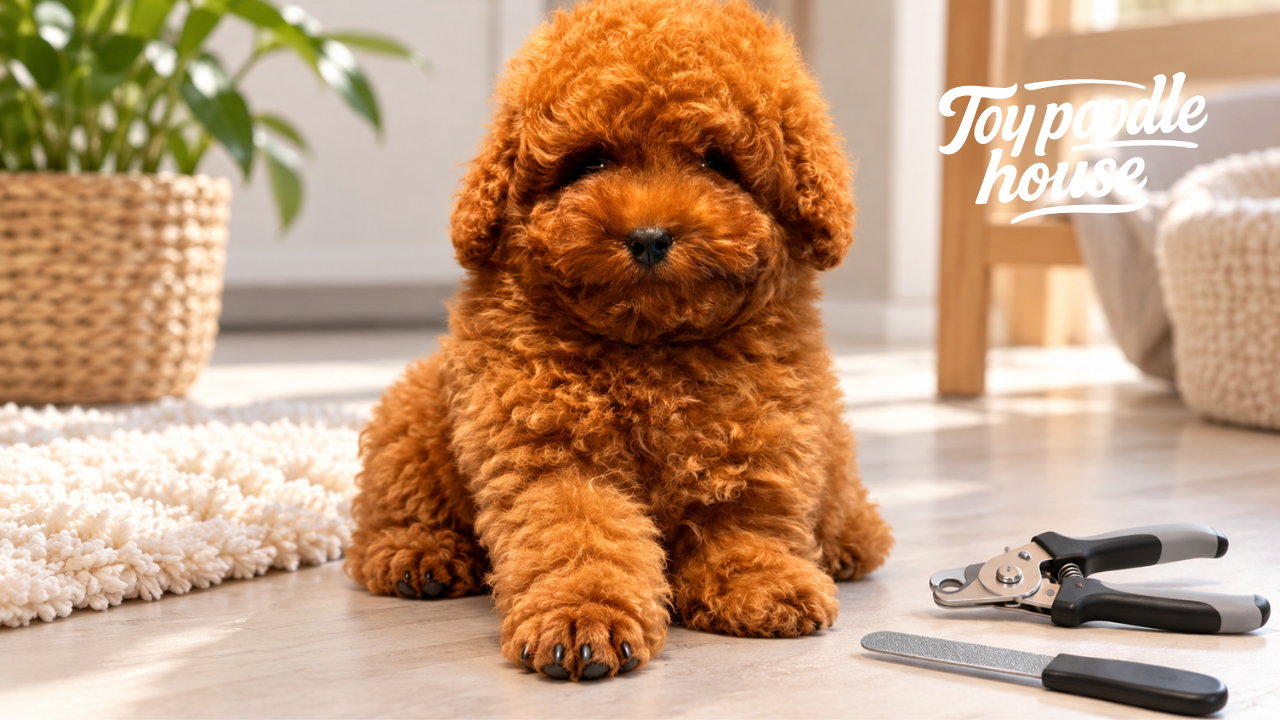
Woolly and Curly: Purebred puppies have dense coats. While the hair is softer in puppyhood, a slight wave or curl is always present. As they reach adulthood, these waves turn into tight, woolly curls.
-
Single-Layer Coat: Poodles do not have an undercoat, which is why they are hypoallergenic.
Body Proportions: The “Square” Formula
A purebred Toy Poodle’s body is built on a foundation of mathematical balance. Experts call this the “Square Proportion.”
-
The Ratio: The height of the dog at the withers (the top of the shoulder) should be roughly equal to the length of the body from the breastbone to the point of the rump. When viewed from the side, the dog should fit into a perfect square.
-
Leg Length: In mixed breeds, the legs are often too short for the body (common in Maltese mixes) or the torso is too long. A purebred Poodle stands noble and upright on elegant, straight legs.
Purebred Analysis Table: Original vs. Mixed Breed
| Feature | Original Toy Poodle | Mixed Breed / Scam |
| Head Shape | Slender, elegant, and proportional | Blunt, flat, or excessively round |
| Eye Shape | Almond-shaped, dark, and intelligent | Round, bulging, or expressionless |
| Coat Texture | Dense, curly, and non-shedding | Straight, silky, or shedding fur |
| Body Form | Square (Height = Length) | Rectangular or short-legged |
| Ears | Long, hanging, covered in curls | Erect or excessively short |
The Definitive Proof: Pedigree and Microchip
While physical traits give you clues, the only 100% proof of purebred status is an FCI (Federation Cynologique Internationale) approved pedigree document.
A Pedigree is a birth certificate that shows at least three generations of the dog’s ancestors. If a seller says, “It doesn’t have papers, but it’s high quality,” you should be very cautious. A purebred dog is one whose genetic heritage is certified by documentation. Additionally, every purebred puppy should have a microchip that matches its identification papers.
Advice to Avoid the Mixed-Breed Trap
-
See the Parents: Always ask to see the mother and father, either in person or via live video. The parents’ physical appearance is the clearest mirror of the puppy’s future.
-
Check References: A professional farm (like Toy Poodle House) will never hesitate to provide references from previous families.
-
Market Value: Advertisements for an “Original Toy Poodle” at a price significantly below the market average usually indicate a mixed breed or a potential scam. Quality and health are always an investment.
Conclusion: The Right Choice for a Lifetime
Owning a purebred Toy Poodle is not just about a “brand name”—it is about living with a non-shedding, odor-free, and world-class intelligent companion. Carefully analyzing these physical traits will protect you from future heartbreaks.
If you want to avoid the risk of a mixed breed and meet a puppy with world-class physical standards, genetic testing, and a guaranteed pedigree, you can trust the expertise of Toy Poodle House.