The Art of Solitude: A Guide to Training Your Poodle to Stay Home Alone
One of the greatest challenges for Poodle owners is leaving their loyal friends behind. Known as “Velcro dogs,” Poodles possess an extraordinary intelligence that makes them deeply attached to their humans. While this bond is beautiful, it also makes the breed susceptible to separation anxiety. At Toy Poodle House, we understand the heartache of hearing those tiny whimpers behind a closed door.
The good news? Your Poodle is smart enough to learn that being alone isn’t a punishment—it’s just a quiet part of their day. With patience, a solid routine, and the right strategy, you can help your puppy find peace in solitude. Here is our step-by-step professional blueprint for home-alone success.

Start Small: The Seconds-to-Minutes Strategy
The foundation of this training is teaching your dog that “departure always leads to a return.” You wouldn’t run a marathon without training; similarly, your dog shouldn’t be left for hours on day one. Start by simply leaving the room for 1 or 2 minutes.
The key is to return before your puppy starts to whine. If you return while they are still calm, you are reinforcing their success. Gradually increase the time—5 minutes, 10 minutes, then 30 minutes—over several days. Every dog has a different pace; never rush this process, as pushing too fast can trigger anxiety.
The Silent Exit: Ending the Drama
Many owners mistakenly turn their departure into an Oscar-winning emotional scene. Long goodbyes filled with “Mommy will be back soon, don’t be sad!” actually signal to your dog that something “unusual” or “dangerous” is happening.
The same applies to your return. If you enter the house with high-pitched excitement and jumping, you teach your dog that the end of solitude is a monumental, sacred event. Instead, keep your exits and entries boring. Be calm, matter-of-fact, and almost indifferent. Solitude should feel as mundane as brushing your teeth.
Creating a Sanctuary: The Safe Space Design
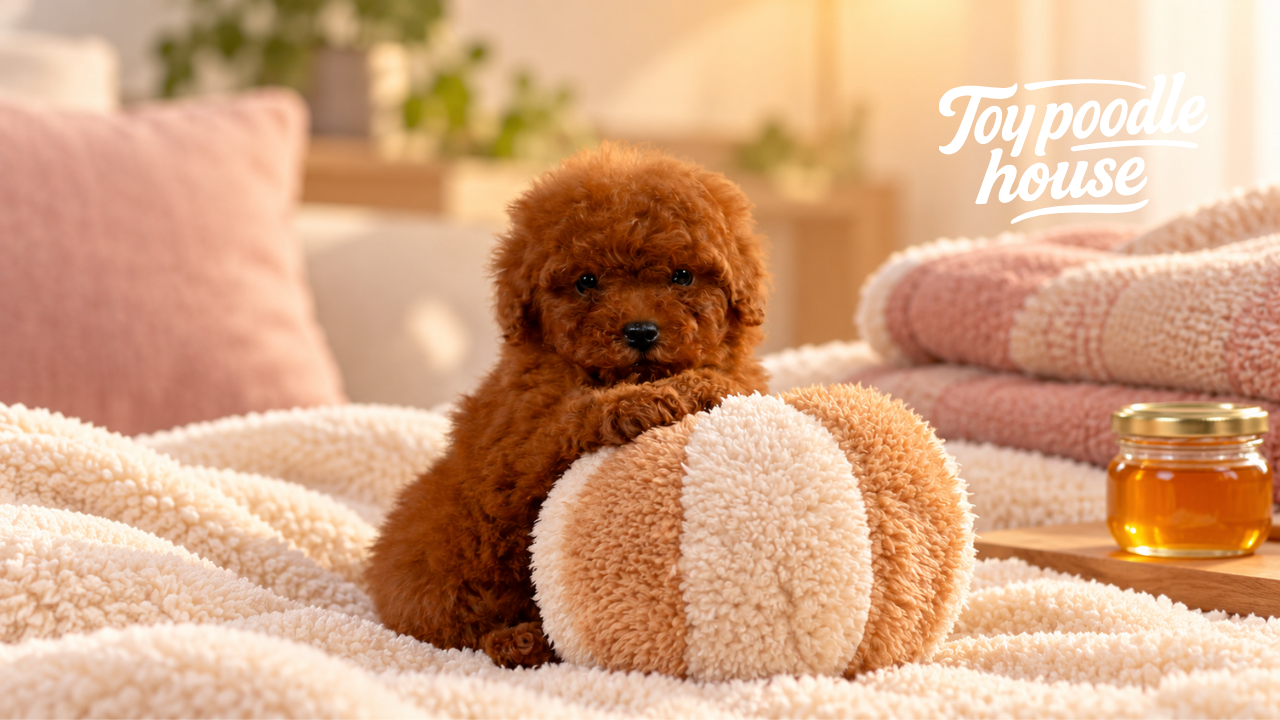
Dogs are den animals by nature. They need a corner of the world where they feel untouchable. To make home-alone training easier, design a Safe Space specifically for your Poodle. This area should include:
-
Their favorite comfortable bed.
-
A fresh water bowl.
-
Familiar-smelling toys.
Whether it’s a specific room or a playpen, this area should be a “palace of peace,” never a place for punishment. When your Poodle views this space as their castle, staying there while you’re gone becomes a relaxing experience.
Mental Stimulation: A Busy Mind is a Calm Mind
Poodles are among the smartest dogs on Earth. When that high-level intelligence is left with nothing to do, it turns into “What part of this sofa should I chew?” To prevent destructive behavior, you must provide mental chores.
Leave your dog with chew toys, treat puzzles, or sniffing games. When your Poodle is focused on excavating peanut butter from a toy or solving a puzzle, they will barely notice you walking out the door. Shifting their focus from the exit to the toy is the secret to a stress-free departure.
The Power of Ambience: Using Sound to Soothe
A silent house can feel hollow and intimidating to a puppy. Every outside noise—a neighbor’s footstep or the hum of an elevator—can put a Poodle on high alert. You can mask these “scary” sounds by leaving a TV or Radio on at a low volume.
Research shows that classical music or “white noise” has a profound calming effect on dogs. This background audio provides a sense of presence and helps your Poodle drift into a deeper, more restorative sleep while you are away.
The Comfort of Routine: Making Life Predictable
Dogs thrive on predictability. A chaotic schedule leads to a chaotic mind. To help your Poodle adapt, establish a consistent daily routine.
Feed them at the same time, walk them at the same time, and perform your “leaving rituals” at the same time. When your dog knows the rhythm of the day—”Now the human reads, then they go out, and then I nap”—their anxiety levels drop significantly. Predictability builds trust, and trust builds calmness.
Rewarding the Silence
When you return home, if your Poodle greets you calmly or stays in their bed instead of jumping like a maniac, they have earned a major reward. Rewarding calmness teaches them that “being quiet and waiting patiently leads to good things.”
Wait for a moment of silence, then offer a small treat or a gentle pet. This transforms the time spent alone from a scary void into a “waiting room” that ends with love and rewards.
Remember: Every Paw Moves at a Different Speed
Some Poodles will master this in three days; others might take three weeks. Do not compare your journey to others. If your dog becomes extremely stressed at a certain stage, take one step back and try again.
At Toy Poodle House, we recommend viewing this not as a “separation,” but as a “maturation” process where your dog learns self-reliance. Your patience today will lead to a lifetime of peaceful, guilt-free departures.
Frequently Asked Questions (FAQ)
1. My Poodle cries the moment I leave. Should I go back? If you return while they are crying, you teach them that “crying brings my human back.” This reinforces the behavior. Wait for at least 5-10 seconds of silence before entering the room.
2. What if my dog destroys the house while I’m gone? This is usually a sign of boredom or high anxiety. Ensure they are physically tired before you leave and provide more engaging chew toys. Never punish them upon your return; they won’t understand why you’re angry.
3. Should I use a camera to watch them? Highly recommended. Smart home cameras allow you to see exactly when your dog starts to get anxious, helping you adjust your training timing more accurately.
Conclusion: Happy Together, Peaceful Alone
Home-alone training is one of the most rewarding milestones in your relationship with your Poodle. Their massive intelligence, when guided correctly, will turn this challenge into a routine lifestyle. Remember, a happy dog is one that can celebrate your presence and find peace in your absence.
Toy Poodle House is always here to support you. If you hit a wall in your training or need specific advice, our expert team is just a call away. Take a deep breath—your first 2-minute session starts now!