Poodle Dental Health: A Comprehensive Guide to Protecting Your Beloved Companion’s Smile – A Toy Poodle House Exclusive
Hello Dear Poodle Enthusiasts, and Welcome to the Toy Poodle House Family!
Here at Toy Poodle House, we are captivated by the elegant, cheerful, and utterly charming nature of Poodles. As the proud companions of this special breed that brightens our homes and fills our lives with indescribable joy, we believe they deserve the absolute best care. Owning a Poodle isn’t just about managing their famous coat; it’s about maintaining their overall health balance, particularly a vital yet often overlooked area: dental health!
Today, with the expertise of Toy Poodle House, we will explore everything you need to know to ensure your Poodle has a healthy mouth structure, pearly white teeth, and fresh breath throughout their life. Get ready as we blend technical insights with a warm, conversational style on this journey to protect your Poodle’s beautiful smile.
Section 1: Why is Dental Health More Critical in Poodles? Technical and Breed-Specific Predispositions
While Poodles come in three main sizes—Standard, Miniature, and Toy—the smaller varieties, especially Toy and Miniature Poodles, are anatomically predisposed to dental problems. Simply labeling them as a “small breed” isn’t enough; we need to delve into the root causes:
1.1. Brachycephalic Tendency and Dental Crowding
Poodles, particularly the smaller types, have jaws that are relatively small in proportion to their body size. This tiny jaw must accommodate the same number of permanent teeth as a large dog: 42.
- Crowding: The teeth, squeezed into the small jaw, often become misaligned and sit too close together. This creates perfect little traps for food particles, particularly sticky, carbohydrate-rich foods, and plaque to accumulate easily between the teeth.
- Reduced Mechanical Cleansing: Due to the irregular alignment, the dog’s natural chewing action does not allow the teeth to rub against each other or the food effectively. This hinders the mechanical self-cleaning that helps scrape off plaque.
1.2. Rapid Plaque Mineralization and Tartar Formation
It is widely believed that small-breed dogs have a different saliva chemistry compared to larger breeds, leading to faster plaque hardening.
- What is Plaque? A soft, white film composed of millions of bacteria, salivary proteins, and food remnants that adheres to the tooth surface immediately after eating.
- What is Tartar (Calculus)? If plaque is not removed by brushing or chewing, minerals in the saliva (calcium phosphate) harden it. This rock-like structure is called tartar. In Poodles, this mineralization process is remarkably fast; plaque can turn into tartar within 24-72 hours. Tartar, being porous, attracts and harbors even more plaque and bacteria.
- The Outcome: Significant tartar build-up can be observed in Poodles in just a few months, necessitating a proactive and rigorous home care routine.
1.3. Genetic Predisposition and Hereditary Periodontal Disease
Similar to humans, certain Poodle bloodlines are genetically more susceptible to periodontal (gum) disease. Gum recession and bone loss can be a risk even in relatively young Poodles. This genetic factor elevates the necessity for meticulous and consistent home dental care.
Section 2: The 5 Pillars of Poodle Dental Care: Your Blueprint for a Healthy Mouth
Protecting your Poodle’s dental health is not just a cosmetic concern; it is a vital step that directly contributes to their quality of life and longevity. Here are the 5 golden rules and detailed implementation strategies:
Pillar 1: Daily Teeth Brushing (The Cornerstone of Your Poodle’s Routine)
Brushing is the most effective and powerful tool for preventing plaque accumulation. No food, toy, or treat can replace it.
- Frequency: Ideally every day, but practically, at least 3-4 times a week is necessary. Plaque must be removed before it hardens into tartar.
- Choosing the Right Equipment:
- Toothpaste: You must use enzyme-based toothpaste formulated specifically for dogs. These pastes are safe for your dog to swallow, and the enzymes (typically glucose oxidase and lactoperoxidase) help break down plaque. NEVER use human toothpaste; ingredients like fluoride and xylitol are toxic if ingested.
- Brush: A soft-bristled, finger brush or a long-handled, small-headed dog toothbrush is ideal. For Toy Poodles, a baby toothbrush may also be suitable.
- Technique Tips: Focus primarily on the outer (cheek-facing) surfaces of the teeth. The inner surfaces receive more cleaning from the tongue and salivary flow. Hold the brush at a 45-degree angle to the gum line and use circular and sweeping motions. Even just 30 seconds of brushing per day will make a tremendous difference.
Pillar 2: Dental-Friendly Nutrition and Clinically Proven Diets
Nutrition directly influences oral health. Sticky, sugary, or high-carbohydrate foods (such as table scraps) accelerate plaque formation.
- Specific Dental Diets: Certain premium dry foods recommended by your veterinarian have a special fibrous texture. When chewed, these foods mechanically scrub the tooth surface. Additionally, they contain specific ingredients (e.g., sodium hexametaphosphate) that bind to calcium in the saliva, slowing down plaque mineralization.
- Dry Food Preference: Dry kibble is generally better than wet food, as chewing creates a slight abrasive effect. Wet food tends to stick to the teeth, promoting plaque formation.
Pillar 3: Strategic Chewing Toys and Dental Treats
Chewing is a natural canine behavior, and when channeled correctly, it significantly aids in dental cleaning.
- Veterinary Oral Health Council (VOHC) Approved Products: Treats and chews bearing the VOHC seal are scientifically proven to reduce plaque and/or tartar build-up.
- Toy Selection: Hard nylon or robust rubber (like Kong-type) toys create a rubbing action against the teeth during chewing. A word of caution: Overly hard items (e.g., real animal bones or very hard plastics) can damage tooth enamel and cause painful tooth fractures. The toy should show some give when you press your thumbnail into it.
- Appropriate Size: Choose toys that are neither too large nor too small for your Toy Poodle, ensuring they pose no choking hazard.
Pillar 4: Oral Rinses and Water Additives
These products are supplementary tools to be used in addition to brushing:
- Chlorhexidine-Based Rinses: Used under veterinary supervision, these solutions reduce the bacterial load in the mouth and support treatment for severe gingivitis (gum inflammation).
- Water Additives: Liquid products added to your dog’s drinking water that contain enzymes and minerals to help slow down plaque and tartar formation. While they don’t replace brushing, they contribute to overall oral hygiene.
Pillar 5: Professional Veterinary Check-ups and Dental Cleaning
No matter how diligent home care is, tartar build-up may become inevitable at some point.
- Regular Check-ups: Take your Poodle for a comprehensive oral examination at least every 6 months, in addition to their general health checks. Your veterinarian can detect early signs of gum recession, loose teeth, or infection.
- Professional Cleaning (Scaling and Polishing): Tartar can only be removed using ultrasonic devices and under general anesthesia. Poodles often require their first professional cleaning (detartrage) starting around 1.5 – 2 years of age. This procedure:
- Is Extremely Safe: Risks are minimized through detailed pre-anesthetic blood work and, if necessary, cardiac evaluations. Modern anesthesia protocols are very secure.
- Cleans What You Can’t See: The veterinary dentist cleans the infected tissue below the gum line and around the tooth roots (curettage and root planing), which is inaccessible at home. This is the most powerful measure to halt the progression of periodontal disease.
Section 3: Managing Dental Health in Poodle Puppies: A Vital Head Start
At Toy Poodle House, we understand the importance of the right start for our puppies to grow into healthy adults.
3.1. Deciduous (Milk) Teeth and Teething Period
Poodle puppies start growing their milk teeth at 3-6 weeks and transition to permanent teeth around 4-6 months of age.
- Protecting Milk Teeth: During this time, gums are itchy and sensitive. Offer appropriate, soft rubber chewing toys. Hard but safe items like chilled carrots can also provide relief.
- Permanent Teeth and Vigilance: The most critical issue, particularly in small breeds, is the failure of milk teeth to fall out on time (Persistent Deciduous Teeth). If the permanent canine tooth is erupting but the baby canine tooth has not fallen out by 6 months, it can cause the permanent tooth to erupt at an incorrect angle, leading to severe crowding. Your veterinarian will need to extract these teeth under anesthesia. This is a common issue for Toy Poodles.
3.2. Early Acclimation and Positive Reinforcement
Building a tooth-brushing routine early prevents the routine from becoming a source of stress in adulthood.
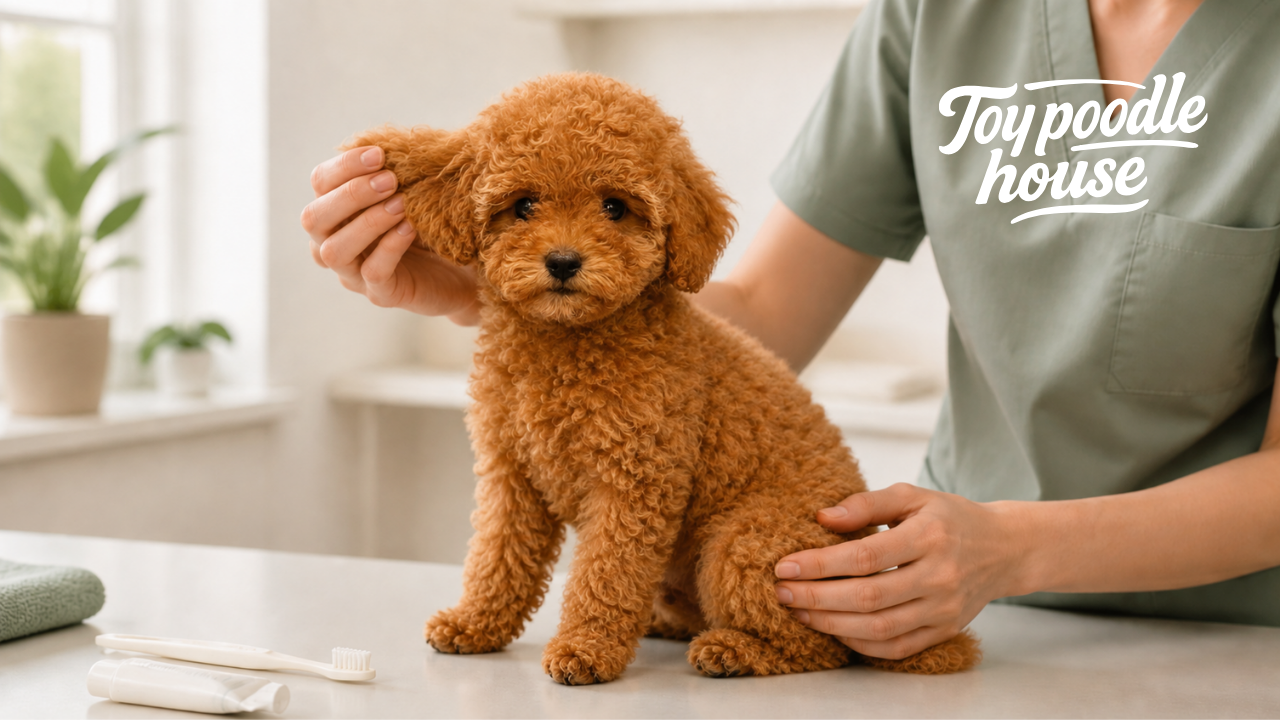
- Step 1: Begin by gently touching their mouth, lifting their lips, and touching their teeth with your finger. Reward after every successful touch.
- Step 2: Use a finger brush or gauze and introduce the taste of the dog-specific toothpaste.
- Step 3: Introduce the brush and paste into a daily routine. Start with very short sessions (10-15 seconds) and gradually extend the duration. Patience and plenty of treats are key to success.
Section 4: Early Signs of Dental Problems and Your Action Plan
Some of the most common signs indicating a health issue in your Poodle relate to their mouth and teeth. When a problem occurs, the body usually raises an alarm.
Common Warning Signs:
- Bad Breath (Halitosis): A dog’s breath should never smell “unbearably” foul. A strong odor is the clearest and earliest sign of bacterial overgrowth and gum inflammation.
- Redness and Bleeding Gums (Gingivitis): Healthy gums are pale pink. Gums that are dark red, swollen, or bleed easily during brushing indicate the onset of inflammation.
- Difficulty Eating or Loss of Appetite: Dogs experiencing dental pain may refuse hard kibble or chew treats, cry while eating, or chew only on one side of their mouth.
- Excessive Drooling: Especially if the saliva is bloody or if your dog is constantly pawing at their mouth, this could signal severe pain or infection.
- Tooth Loss or Looseness: A tooth starting to fall out indicates an advanced stage of periodontal disease, where the bone surrounding the tooth root has significantly eroded.
Immediate Action: If you notice any of these signs, contacting your veterinarian without delay is the most critical step to prevent tooth loss and systemic infection risk. Oral infections are not confined to the mouth; they can spread via the bloodstream to vital organs like the kidneys, liver, and heart, causing serious systemic health issues.
Section 5: Frequently Asked Questions (FAQs) and In-Depth Answers
Q: What if I absolutely cannot brush my Poodle’s teeth?
A: While brushing is ideal, if it’s genuinely impossible, use strategic alternatives:
- VOHC-Approved Dental Chews: Give these treats daily or every other day to provide mechanical cleaning assistance.
- Water Additives: Use solutions added to the drinking water that help regulate the oral pH and bacterial balance.
- Increase Professional Check-up Frequency: If home care is lacking, shorten the waiting period for professional cleaning (e.g., every 6-12 months).
Q: How high is the anesthesia risk for dental cleaning?
A: In modern veterinary medicine, the risk of anesthesia, especially for healthy, younger Poodles, is minimal. The risk is far lower than the risk of infection and organ damage caused by not performing the necessary dental procedure.
- Protocol: Comprehensive blood work, IV catheter placement, gas anesthesia (the safest), intubation, and continuous monitoring (of heart rate, oxygen saturation, and blood pressure) minimize risks. A skilled team and modern equipment make this process safe. Dental cleaning is not risky; rather, it is a vital step in preventative medicine.
Q: Is bad breath considered normal?
A: No, never. While a mild “dog breath” odor may exist, a foul, rotten, fishy, or very heavy odor signifies bacterial overgrowth, gum disease, a sinus infection, or rarely, a systemic disease (kidney failure, diabetes). The moment you notice bad breath, it’s a clear signal to schedule a vet appointment.
Q: Is it okay if my Poodle swallows the toothpaste while brushing?
A: Yes, toothpastes specially formulated for dogs are designed to be swallowed and are not harmful. In fact, some contain enzymes that may offer benefits to the digestive system when ingested.
Conclusion: Ensuring Your Poodle Lives with a Healthy Smile
Dear Poodle House Friends,
The care you dedicate to your Poodle’s dental health is a tangible testament to your love. Remember that oral health forms the very base of the general health pyramid. A healthy mouth means a long and comfortable life. The joyful leaps and unconditional love our Poodles offer are even more meaningful when crowned with a healthy, vibrant smile.
At Toy Poodle House, we don’t just raise Poodles; we empower you with the knowledge and awareness required for their lifelong healthy journey. Remain committed to your routine, never dismiss your companion’s bad breath, and be diligent with your regular veterinary visits.
Stay healthy, stay loving, and enjoy your Poodle’s sparkling smile!
Note: This article is prepared by Toy Poodle House for informational purposes. It is always recommended to consult a veterinarian for your dog’s specific health condition and treatment methods.