The Poodle Puppy Fear Period: A Guide to Overcoming Challenges with Love, Patience, and Positive Reinforcement
Dear Toy Poodle Enthusiasts and Valued Members of the Toy Poodle House Family,
Sharing your home with a Toy Poodle puppy is an unparalleled joy. Those tiny, curious paws, the endless curls, and the boundless love they offer fill every moment with light. Yet, this wonderful journey sometimes presents unexpected twists. One day, your puppy might be a brave explorer, and the next, they might suddenly transform into a timid, trembling dog, retreating from the slightest noise or unfamiliar object. If you’re experiencing this sudden shift, please don’t worry! You are most likely encountering a normal, temporary, and critical developmental stage known as the “Puppy Fear Period.”
At Toy Poodle House, our commitment goes beyond just providing healthy, well-socialized, and structurally sound Toy Poodle puppies. We aim to equip you with the knowledge and tools necessary to forge a happy, lifelong partnership with your furry family member. This comprehensive guide will scientifically examine the fear period, offering step-by-step techniques rooted in love, patience, and modern behavioral science to help your little friend navigate this phase and emerge as a confident, well-adjusted adult.
Understanding the Poodle Puppy Fear Period: Science and Evolution
The Fear Period (or Fear Impact Period) is a crucial, evolutionary-driven component of a puppy’s cognitive development. It is a temporary stage where the puppy’s survival instincts are heightened, causing them to perceive stimuli they previously ignored as suddenly frightening or dangerous. This is not a sign of poor breeding or an inherent issue; it is a perfectly natural part of their maturation process.
The Neurobiology of Puppy Fear
To understand the fear response, we must look at the brain. The amygdala, a small, almond-shaped structure deep within the canine brain, is the control center for emotional responses, especially fear and threat detection. During a fear period, the puppy’s central nervous system becomes more reactive. The brain is rapidly processing new information and attempting to categorize experiences as “safe” or “dangerous.”
Because Toy Poodles are a highly intelligent and sensitive breed, they tend to be exceptionally observant of their environment. This heightened awareness can sometimes translate into a more noticeable or intense reaction to novel or ambiguous stimuli during these sensitive windows.
The Two Critical Fear Windows in Toy Poodles
In Toy Poodle puppies, two primary fear periods are typically observed. Recognizing the timing of these windows is paramount for successful socialization and training strategies:
1. The Primary Fear Period (The First Fear Imprint) (8 to 11 Weeks)
- Timing: This phase often coincides with the puppy’s transition from the breeder’s home (Toy Poodle House) to their new permanent home.
- Causes: The sudden change in environment, new sights, new sounds (vacuum cleaners, doorbells), and separation from the mother and littermates create significant stress.
- Significance: This is sometimes called the “Imprint Period” because a single, highly negative or traumatic experience (e.g., being dropped, an overly loud bang, a rough encounter with another dog, or a severe reprimand) during these few weeks can be deeply imprinted on the puppy’s memory, potentially leading to a lifelong phobia or deep-seated anxiety. Extreme care and positive experiences are essential during this time.
2. The Secondary Fear Period (The Adolescent Fear Period) (6 to 14 Months)
- Timing: This phase occurs as the puppy enters adolescence, often corresponding with hormonal surges and the onset of sexual maturity.
- Causes: The fear response in this period is often targeted at things the dog previously accepted—a familiar piece of street furniture, a specific neighbor, a statue in the park, or strange shadows during an evening walk. The adolescent brain is recalibrating, re-evaluating, and preparing for “adult” survival, making it hyper-vigilant to potential threats.
- Significance: Because the dog is older, these fear responses can sometimes be more challenging to resolve and may last longer than the first period. The dog is now more physically capable of acting on its fear (fleeing or defending itself). This phase requires consistent, mature, and patient positive reinforcement training to prevent fear-based behaviors from becoming permanent habits.
Identifying the Signs: Is Your Toy Poodle in a Fear Period?
Toy Poodles are expressive dogs, and their body language is often the first indicator of stress or fear. Learning to accurately read these signs is the first step toward effective intervention.
Body Language and Physiological Indicators
- Retreat and Hiding: The most common sign. This involves a rapid withdrawal to a perceived safe spot (under a bed, behind a couch), often accompanied by shaking or trembling, a lowered posture, and the tail tucked tightly between the legs.
- Calming Signals: Behaviors intended to diffuse tension or communicate unease. These include frequent, exaggerated yawning, excessive lip-licking (often when no food is present), and abruptly turning the head away.
- Ear Position: Ears pinned flat back against the head, signifying submission or anxiety.
- Eye Contact: Avoidance of eye contact, squinting, or the appearance of “whale eye” (where the whites of the eyes are prominently visible, indicating high tension).
- Piloerection (Hackle Raising): The hair along the back or shoulders stands up. This is an involuntary, sympathetic nervous system response, not necessarily a sign of aggression, but definitely of high arousal or fear.
Behavioral Changes
- Leash Aversion: Sudden refusal to walk, planting all four paws, dragging the leash, or trying to bolt back toward the house when outside. For an otherwise energetic breed like the Toy Poodle, this is a clear change.
- Defensive Reactions: In some cases, extreme fear can trigger a “fight” rather than “flight” response. This may manifest as growling, barking, lunging, or snapping at the feared stimulus (a person, a sound, or another dog). This is almost always a fear-based defensive reaction, not true aggression, but it must be addressed carefully.
- Loss of Appetite/Play Drive: Refusing favorite high-value treats or suddenly losing interest in a beloved toy or game.
- Housetraining Regression: Stress hormones like cortisol can temporarily impair bladder and bowel control. Accidents inside the house, even from a previously reliably trained puppy, are common stress indicators.
The Proactive Approach: Overcoming Fear with Love and Consistency
Your reaction to your Toy Poodle’s fear is the single most important factor in determining whether this phase resolves successfully or develops into a permanent behavioral issue. You must be a calm, consistent, and trusted leader.
Principle 1: Be the Anchor—Calmness Above All
THE CORRECT RESPONSE:
- Acknowledge and Redirect: When your puppy shows fear, maintain a calm, low-toned, and cheerful voice. Speak in simple, non-dramatic sentences (e.g., “It’s okay, let’s look at this,” or “Good boy, come here”). Immediately ask for a basic obedience command like “Sit” or “Touch.”
- Reward Success: When the puppy complies with the command, immediately reward them with a favorite high-value treat. This shifts their focus from the fear response to a positive, rewarding action.
- Physical Reassurance (When Appropriate): Instead of scooping them up, gently crouch down beside them. A simple, reassuring scratch on the chest or behind the ears can offer security, but avoid excessive petting that might reinforce the fear (“Poor baby, you’re so scared!”).
WHAT TO AVOID—REINFORCING FEAR:
- Excessive Codling: Overly dramatic reassurance or constantly carrying the puppy (“Oh, you poor thing!”) can inadvertently reward the fear behavior. The puppy learns, “When I shake, my owner gives me maximum attention, so I should keep shaking.”
- Punishment or Scolding: Never scold, yell at, or physically correct your puppy for showing fear. This is the fastest way to turn a temporary fear into a permanent phobia and destroy the foundation of trust you are building.
Principle 2: Controlled Desensitization and Counter-Conditioning (The Technical Solution)
The goal is not to eliminate the scary thing, but to change the puppy’s emotional response to it. This requires two specific behavioral techniques: Desensitization and Counter-Conditioning.
- Desensitization (Gradual Exposure): Identify the frightening stimulus (e.g., a person wearing a large hat). Start your puppy at a distance where they notice the hat but are not yet reacting in fear. This is the sub-threshold distance. Over days or weeks, very slowly reduce this distance, always staying just below the point where your puppy panics.
- Counter-Conditioning (Creating Positive Associations): This is the core technique. Every time your puppy observes the scary stimulus (the hat-wearer) at a safe distance, immediately feed them the highest-value reward you have (e.g., chicken, cheese, or liver treats).
- The Goal: To change the internal emotional response: Hat-Wearer = Scary becomes Hat-Wearer = Delicious High-Value Treat.
- Controlled Socialization: Continue to introduce your Toy Poodle to a wide variety of sounds, sights, and textures. Expose them to people of different demographics (men with beards, children, people using canes, people in uniforms). Ensure these experiences are always low-pressure and paired with rewards.
Principle 3: Leveraging Routine and Predictability
Predictability provides immense security for a developing puppy’s brain. Toy Poodles thrive on structure.
- Fixed Schedule: Maintain consistent mealtimes, potty breaks, and bedtime routines. A stable routine tells the puppy that their world is safe and predictable.
- The Safe Haven: Ensure your puppy has a designated, private, safe space—a crate or a comfortable bed tucked into a quiet corner—that is theirs alone. Never use this space for punishment. When they retreat there out of fear, leave them undisturbed until they choose to emerge.
Principle 4: Confidence Building Through Training and Enrichment
For intelligent breeds like the Toy Poodle, training is not just about obedience; it’s a powerful tool for confidence building.
- Focus on Success: Practice known, simple commands like “Sit,” “Stay,” and “Come.” When a dog successfully performs a task and is rewarded, they build a sense of competence and mastery.
- Scent and Puzzle Work: Engage your puppy’s brain with mental enrichment. Puzzle feeders, snuffle mats, and hide-and-seek games are excellent ways to relieve stress, distract from environmental triggers, and build problem-solving skills, which directly translates to self-assurance.
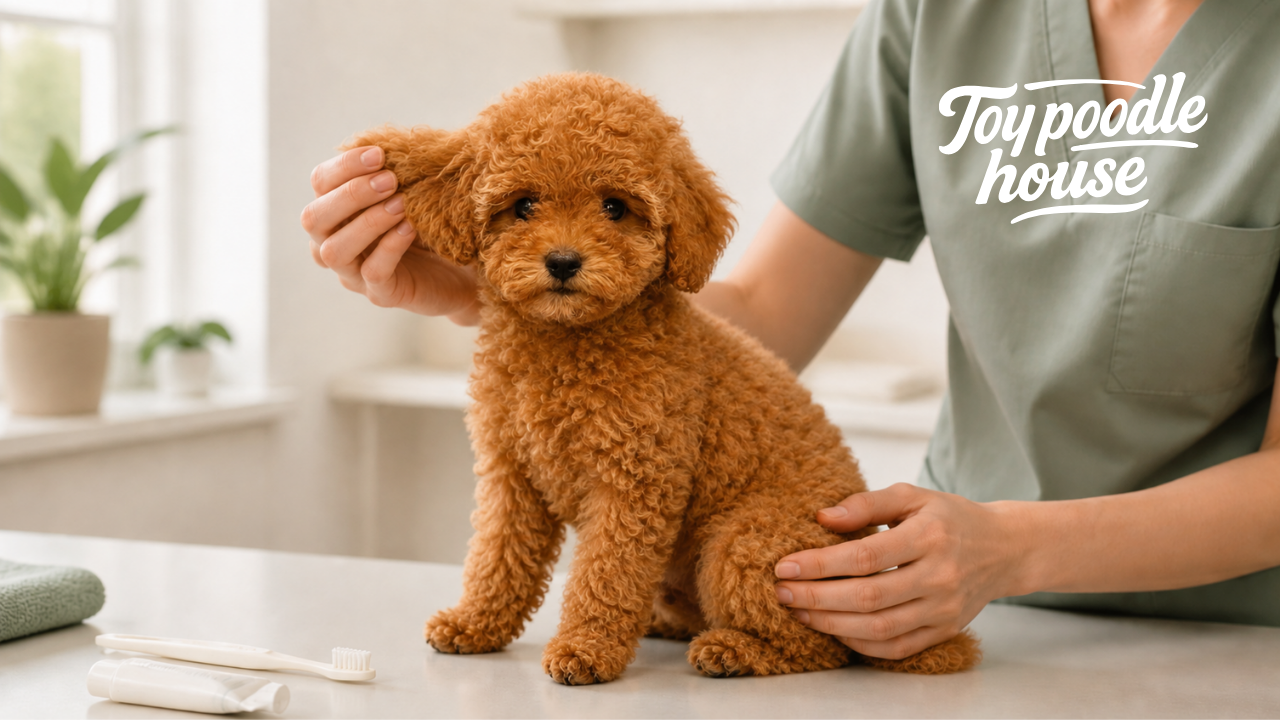
- Handling and Grooming: Maintain regular, positive grooming routines (brushing, touching paws, looking in ears). Pair these necessary activities with generous treats. This desensitizes them to being handled, reducing the fear associated with necessary vet visits or professional grooming later on.
Common Mistakes to Avoid During the Fear Period
Mistakes made during this sensitive time can solidify a temporary fear into a permanent, lifelong behavioral issue.
- Forcing Interaction: Forcing your puppy to “face their fears” by pushing them toward a scary object (a person, another dog, or a noise source) is a critical error. This creates a state of flooding, overwhelming the dog’s emotional capacity, and only teaches them that their human cannot be trusted to protect them.
- Avoiding the World Entirely: While you shouldn’t force exposure, you also shouldn’t stop all socialization. Completely isolating the puppy to “protect” them during this period can lead to under-socialization and potentially lifelong anxiety or fear-based reactivity. Continue controlled, positive exposure as described above.
- Using Aversive Tools: The use of harsh or punitive tools like choke chains, prong collars, or e-collars is entirely counterproductive, especially during a fear period. These tools rely on pain or fear to enforce compliance, and their use during this sensitive phase will almost certainly compound the fear and may redirect defensive aggression toward the handler.
- Inconsistency: Sending mixed signals (one owner coddles, the other scolds) creates confusion and prevents the puppy from trusting the environmental structure. The entire family must agree on and adhere to the calm, positive reinforcement strategy.
When to Seek Professional Intervention
Most Toy Poodle puppies, with consistent, positive handling, will pass through these fear periods naturally. However, if the fear seems disproportionately intense or persistent, professional help may be necessary.
Consult a professional if:
- Intensity is Extreme: The fear reactions involve uncontrollable panic attacks, constant elimination out of stress, or frantic attempts to escape that could lead to injury.
- Fear Leads to Aggression: The fear is consistently manifesting as defensive aggression (growling, lunging, or biting attempts) toward people or other animals.
- Duration is Prolonged: The fear response lasts for several months without any signs of improvement, significantly impairing the puppy’s quality of life or ability to function normally in the home.
In these situations, seek advice from a Veterinary Behaviorist (Dip ACVB) or a Certified Professional Dog Trainer (CPDT-KA) who utilizes fear-free, positive reinforcement methods. These specialists can develop a tailored behavior modification program that may include environmental management, systematic desensitization protocols, and, if necessary, short-term behavioral medications.
The Toy Poodle House Commitment to Confidence
At Toy Poodle House, we lay the groundwork for your puppy’s confidence long before they come home to you.
- Early Neurological Stimulation (ENS): We implement specific protocols to promote stronger cardiovascular performance, greater stress tolerance, and enhanced resilience in our newborns.
- Enriched Environment: Our puppies are raised in a simulated home environment, exposed to various gentle noises (radio, household appliances), surfaces (carpet, tile, wood), and age-appropriate obstacles to promote sensory development and flexibility in their nervous system.
- Temperament Testing: We carefully observe and assess the individual temperament of each puppy, providing you with detailed insights into their personality and potential sensitivities so you can be prepared to manage their specific needs during the fear periods.
Your Toy Poodle puppy is relying on you to be their rock. By approaching this developmental phase with love, profound patience, and the techniques of positive reinforcement, you are not just managing fear—you are actively building the foundation for a secure, balanced, and joyfully confident companion for life.
With best wishes and paw-tive energy,
The Toy Poodle House Family