🐩 The Ultimate Guide to Socializing Poodle Dogs
How to Raise a Confident, Friendly, and Well-Balanced Poodle
Why Is Socialization So Important?
Poodles are among the most intelligent and affectionate dog breeds in the world.
But even the smartest Poodle can sometimes act shy, anxious, or overly alert in unfamiliar situations.
So, what’s going on here?
The answer is simple: a lack of proper socialization.
Just like people, dogs need to explore, trust, and understand the world around them.
Socialization helps your Poodle develop calm and confident reactions to new experiences.
In this guide, we’ll walk you through every stage of socializing your Toy or Miniature Poodle — with professional tips straight from Toy Poodle House experts.
🧠 Understanding the Poodle Personality: The Foundation of Socialization
Poodles are naturally intelligent, alert, and emotionally sensitive.
They learn quickly, but they also pick up on your mood and energy.
That’s what makes them so special — and sometimes so delicate.
Common Personality Traits of Poodles:
-
Strong emotional bond with their owner
-
Sensitive to tone, energy, and routine changes
-
Quick learners but easily overstimulated
-
Thrive on trust and consistency
When a Poodle puppy encounters the world for the first time, every sound, smell, and touch leaves an impression.
That’s why early socialization is not just recommended — it’s essential for emotional development.
🐾 What Is Poodle Dog Socialization?
Socialization means introducing your dog to a variety of people, animals, sounds, and environments so they can react calmly instead of fearfully.
The goal is simple: confidence without chaos.
When Should You Start?
Experts recommend beginning between 3 and 14 weeks of age, when your puppy’s curiosity is strongest.
But don’t worry — it’s never too late. With patience and the right approach, even adult Poodles can make great progress.
🏡 Step One: Socialization at Home
Before you take your puppy out into the world, help them feel secure in their first environment — your home.
Home Socialization Tips:
-
Introduce household sounds: Vacuum cleaner, doorbell, TV, hairdryer, etc.
-
Different textures: Let them walk on tile, carpet, and grass.
-
Mirror moments: Seeing their reflection helps with confidence.
-
Short separations: Practice short alone times to prevent separation anxiety.
At Toy Poodle House, early home-based experiences form the foundation of every puppy’s confidence.
🧍♂️ Socializing With People: Building Trust the Right Way
Many Poodles are naturally cautious around strangers.
This isn’t a flaw — it’s part of their alert, intelligent nature.
However, regular positive contact will help your dog become more balanced and friendly.
How to Introduce People Safely:
-
Start small: Begin with familiar faces — family and close friends.
-
Use rewards: Pair every new interaction with treats and praise.
-
Avoid pressure: If your Poodle hesitates, let them approach in their own time.
-
Vary the experience: Expose them to people of different ages, voices, and appearances.
Why is this important? Because every positive encounter builds emotional stability — the foundation of a confident adult Poodle.
🐶 Socializing With Other Dogs: Balance Is Key
Some Poodle owners worry when their dog avoids or barks at other dogs.
But in most cases, the issue isn’t the Poodle — it’s the introduction method.
Safe Dog-to-Dog Introductions:
-
Neutral ground: Meet in a park, not in your living room.
-
Keep it short: 5–10-minute sessions are ideal at first.
-
Read body language: Tail position, ear movement, and barking tone reveal emotions.
-
Avoid bad matches: Don’t introduce your dog to aggressive or dominant animals.
At Toy Poodle House, group play sessions are conducted under professional supervision — helping puppies learn social cues naturally.
🌆 The Outside World: New Sights, Sounds, and Sensations
Poodles are highly sensitive and observant, which means busy environments can easily overwhelm them.
Gradual exposure is the key.
Outdoor Socialization Steps:
-
Start with calm streets.
-
Introduce traffic sounds from a distance, then slowly move closer.
-
Visit dog-friendly parks and cafes to teach calmness in public spaces.
-
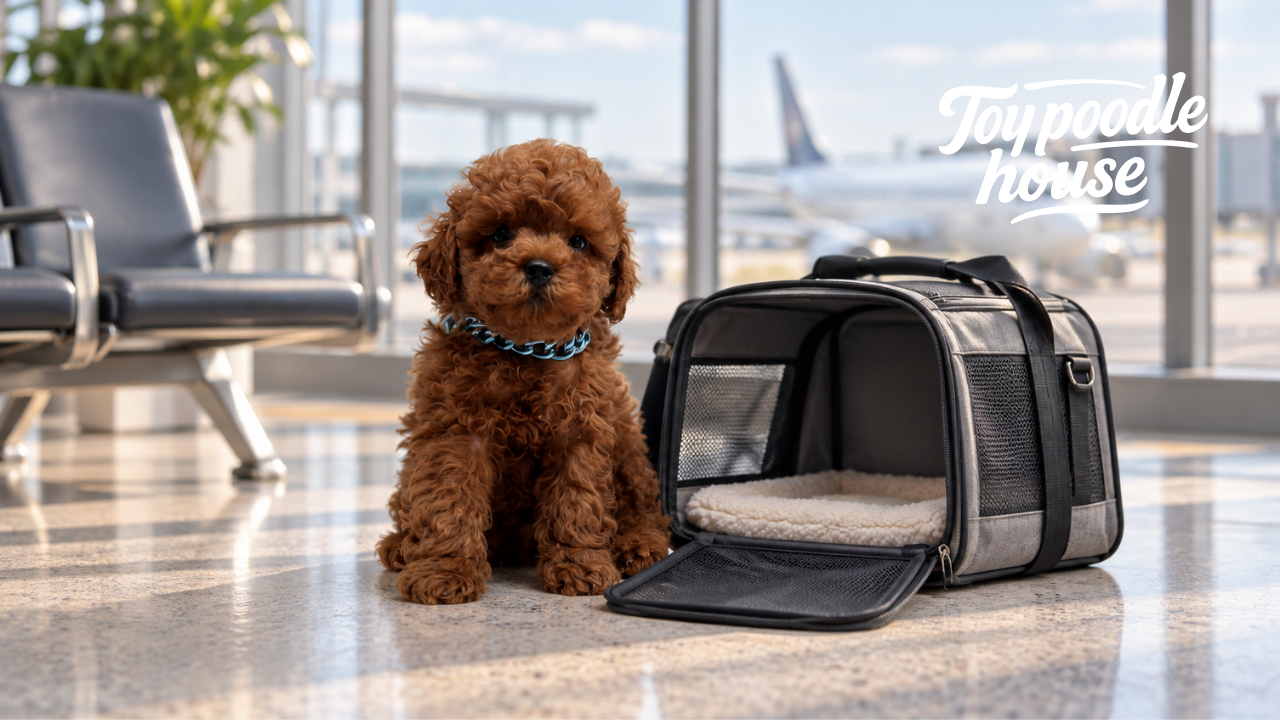
Use a travel bag or car crate to reduce travel stress.
Remember: socialization isn’t just exposure — it’s positive exposure that builds trust.
🎓 Combine Socialization With Training
Basic obedience commands (sit, stay, come) make socialization easier and safer.
They give your dog a sense of control and help you guide behavior calmly.
At Toy Poodle House, socialization is integrated into positive-reinforcement training programs — blending emotional and behavioral growth for well-rounded results.
⚖️ Common Mistakes to Avoid
Even the most loving owners can unintentionally slow down socialization.
Here are some mistakes to watch out for:
-
Forcing your dog into stressful situations
-
Taking unvaccinated puppies to public areas too early
-
Overprotecting and limiting new experiences
-
Allowing uncontrolled play with aggressive dogs
-
Using punishment or yelling during fear reactions
Each of these can increase anxiety instead of confidence.
Gentle consistency always wins over force.
❤️ The Bond Between Poodle and Owner
The strongest social connection your Poodle will ever have — is with you.
Daily interaction, playtime, eye contact, and calm communication strengthen that bond.
A confident, trusting dog mirrors its owner’s emotions.
If you’re relaxed and kind, your Poodle will be too.
🔍 Socialization Checklist: How Well Is Your Poodle Doing?
Use this simple test to gauge your Poodle’s social comfort level:
| Situation | Reaction | Meaning |
|---|---|---|
| Stranger approaches | Wags tail, approaches calmly | Confident and balanced |
| Loud noise (vacuum, horn) | Startles but recovers | Sensitive but adaptable |
| Sees another dog | Invites play or stays calm | Socially aware |
| Walks in crowds | Focused, calm | Well socialized |
If your dog shows signs of panic, aggression, or trembling, don’t worry.
Professional behavior guidance (like the one provided at Toy Poodle House) can gently reshape these reactions.
🌈 Conclusion: Socialization Is a Lifelong Journey
Socialization doesn’t end when your puppy grows up — it evolves with every new experience.
Every walk, every person, every trip is an opportunity to grow your Poodle’s confidence.
Soon, you’ll notice it — that proud little step, that wagging tail, that fearless curiosity.
That’s the sign of a truly happy, well-socialized Poodle.
Want to share your story?
Leave a comment below or reach out to the Toy Poodle House team — let’s raise happier, friendlier Poodles together. 🐾
❓ Frequently Asked Questions (FAQ)
1. When should I start socializing my Poodle puppy?
The ideal window is between 3 and 14 weeks, but adult dogs can also learn with patience.
2. My Poodle is afraid of strangers — what should I do?
Go slowly. Use treats and calm energy to create positive associations.
3. My dog barks at every other dog — is that normal?
It’s often a sign of poor early experiences. Controlled introductions help a lot.
4. My Poodle cries when left alone. Is that socialization related?
Yes. Early desensitization to short separations helps prevent anxiety.
5. Are Toy Poodles naturally social?
Yes — they’re affectionate and people-oriented by nature, especially when socialized early.